7 Self-Editing Mistakes Nonfiction Authors Make (and How to Avoid Them)

You've spent months (maybe even years) writing your nonfiction book. You've revised chapters, polished sentences, and read your manuscript so many times you could practically recite parts of it from memory. So when you reach the final draft, it's easy to think you're ready to publish.
But here's the challenge: the closer you are to your manuscript, the harder it becomes to see it objectively.
Every author has blind spots. And, yes, that includes seasoned, traditionally published writers. After spending so much time with your work, you naturally read what you intended to write rather than what's actually on the page. That's why editing isn't about changing your voice or taking over your story. It's about having a skilled partner who can spot the gaps, inconsistencies, and missed opportunities that are nearly impossible to catch on your own.
Before your manuscript reaches a professional editor, though, there's one important step you shouldn't skip: self-editing. Taking the time to strengthen your own draft can improve clarity, eliminate avoidable errors, and help your editor focus on refining your message rather than correcting preventable issues. The result is a stronger manuscript and often a more efficient editing process.
Here are seven common mistakes I see nonfiction authors make and how you can avoid them:
1. Editing Sentence by Sentence Before Looking at the Big Picture
It's easy to focus on grammar and punctuation first, but polishing individual sentences won't help if your chapters are out of order or your ideas aren't clearly organized. The first step is really nailing down what the main purpose of your manuscript is. Ask yourself–what do I hope the reader walks away with? Sum this up in one or two clear, concise sentences and write it down. A manuscript without a clear purpose sets up the reader for a confusing reading experience.
Once you have a clear purpose ask yourself:
Does each chapter support that purpose?
Is the information presented in a logical order?
2. Trying to Sound More Impressive Than Clear
The hard truth is there are few things that hurt a manuscript more than one that feels like a chore to read. That isn’t to say that what you’ve written is boring, but the way it was written makes it hard to find the core of your message. Many authors assume that complex writing sounds more authoritative. In reality, readers appreciate writing that is clear, direct, and easy to understand. Your reader’s time is valuable and a good book respects that.
Look for opportunities to:
Simplify your language
Eliminate unnecessary words
Replace vague statements with specific examples
3. Overlooking Inconsistencies
Small inconsistencies can distract readers without them even realizing why. For example, if you refer to someone as a "client" in Chapter 2, avoid calling them a "customer" in Chapter 8 unless there's a clear reason for the change. Keeping details consistent builds credibility and trust.
Always check for consistency in:
Terminology
Chapter titles
Capitalization
Formatting
Names
Dates
Numbers
4. Forgetting About the Reader
As the author, you already know your subject. Your readers don't. Try reading your manuscript through the eyes of a first-time reader. Are there complex concepts that they might not understand? What questions might they have? Readers don’t want to have to pull up Google every couple paragraphs to decode the writing or acquire pertinent background information. It is so important to make sure your writing meets your intended reader where they’re at.
5. Only Running Spell Check
Spell check is helpful, but it can't identify awkward wording, weak transitions, or confusing explanations. One of the best ways to remedy this is to read your manuscript aloud or run it through a text-to-speech tool. You'll quickly notice sentences that don't flow naturally.
6. Editing Forever
Every author reaches a point where another round of self-editing offers very little improvement. If you find yourself changing the same sentence for the fifth time, save yourself the headache and reach out to a professional editor. Professional editors provide a fresh perspective that's impossible to give yourself.
7. Thinking Professional Editing Is Just Grammar
One of the biggest misconceptions about editing is that it's simply correcting punctuation. A professional editor also evaluates clarity, organization, consistency, reader experience, flow, and readability—all while preserving your unique voice. As the author, you know what you meant to say which can make it difficult to spot areas where readers may become confused, lose interest, or need additional clarity. This is exactly where professional editing makes all the difference.
Ready to Strengthen Your Manuscript?
You've invested countless hours into writing your book. Don't let preventable editing mistakes keep your message from reaching readers the way you intended.
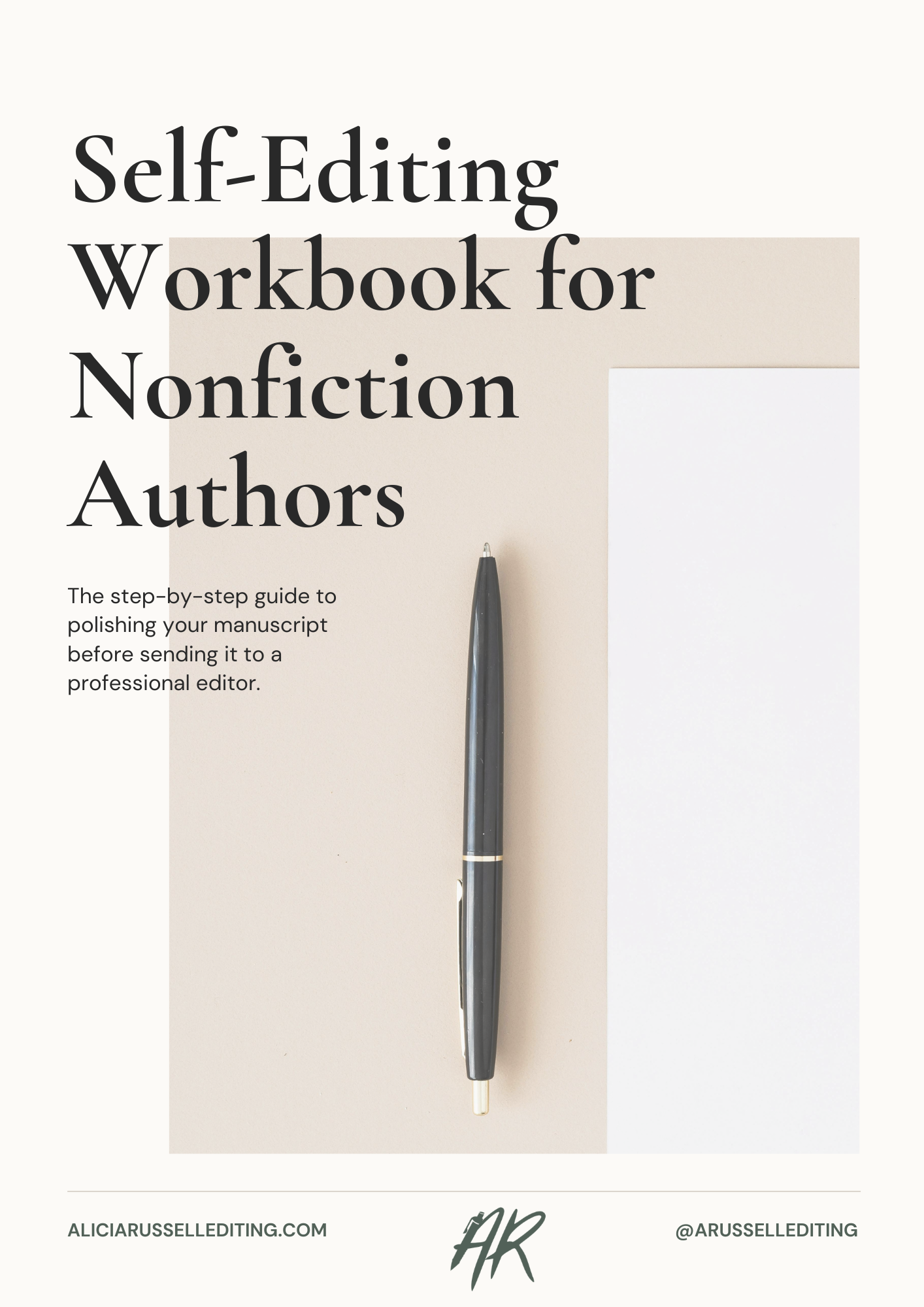
Download the Self-Editing Workbook for Nonfiction Authors and take the next step toward a clearer, stronger manuscript before you send it to a professional editor.